
Dr. Morse's 1997 Iridology News Report
Ignaz von Peczely
With an extensive history and book material dating back to the late 1600s, iridology is a remarkable asset to anyone willing to use it for body health assessment.
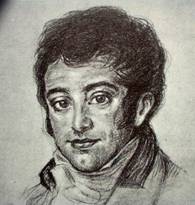
Modern iridology, the most efficient form of soft tissue analysis known, is attributed to Ignaz von Peczely, a Hungarian physician, who discovered the science in 1853 and made it known in Europe. He was also the first to begin mapping out the iris chart.
Peczely’s Story
During his childhood, Peczely accidentally broke the leg of an owl during play. He noticed a dark stripe in the 6 o’clock region of the owl’s corresponding iris.
As he nursed the owl back to health, he discovered that the stripe eventually vanished, leaving only a little mark behind. He later went on to study the works of others on the subject of iridology.
While working as a surgeon, Peczely was able to do comparative research by identifying correlating changes in people’s irides and making careful notes of changes that occurred before and after they had gone through surgery.
Bernard Jensen

Iridology has evolved extensively ever since.
It's been practiced, refined, and perfected by enthusiasts and practitioners worldwide.
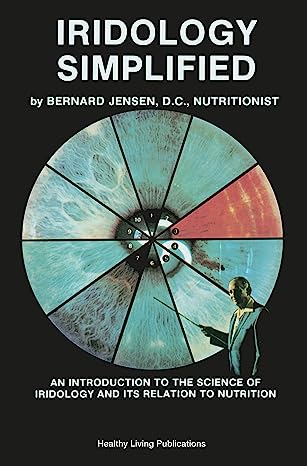
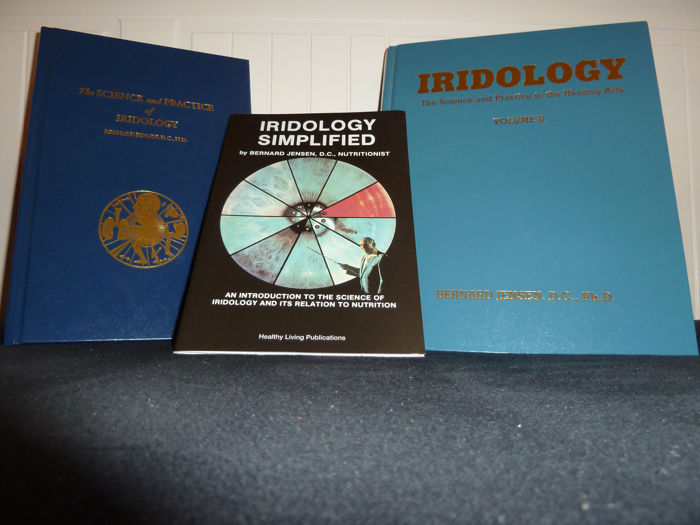
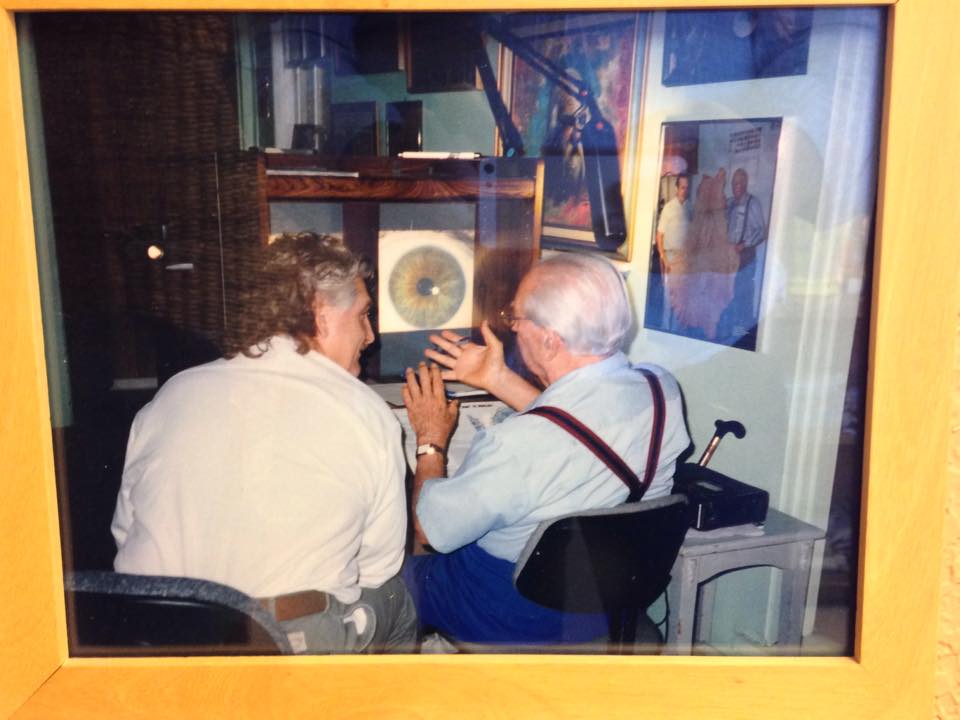
A notable advocate for iridology was Bernard Jensen, D.C. Ph.D, who brought the scope of American iridology to a whole new level and contributed extensively to improving iris charts throughout his lifetime of work.
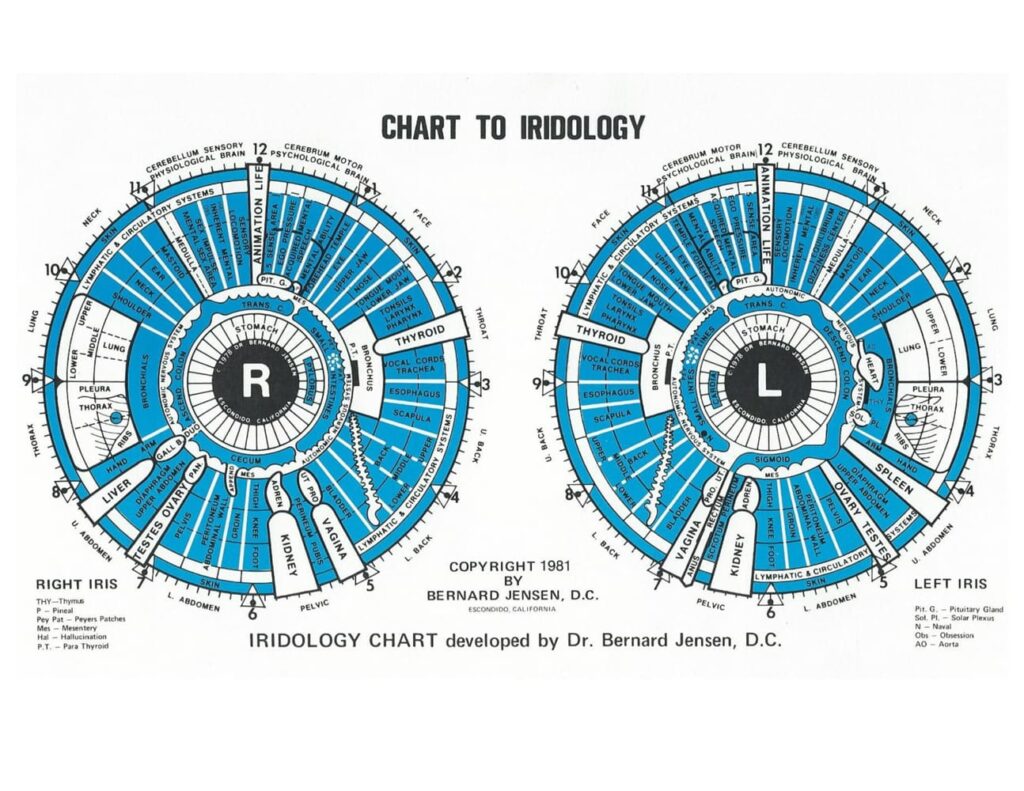
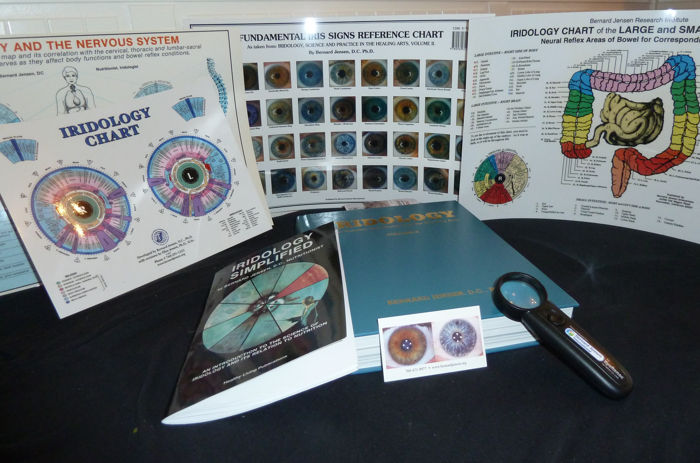
His iridology chart is still widely used by practitioners worldwide.
What Can You See?
Iridology is the science and study of the eye's iris and its relationship to the tissues in your body. It's referred to as a roadmap to the strengths and weaknesses of all the body's cells.
The iris reveals:
- your constitutional makeup (genetics);
- tissue weaknesses (including prolapsed conditions) or strengths; and
- levels of congestion and toxicity (including chemical accumulations).
It also reveals the degree to which these obstructions, bioaccumulation, and weaknesses are present.
Iridology is NOT a tool for diagnosing medical conditions. Rather, it provides the practitioner with insight into a person's general state of health, enabling the practitioner to identify noteworthy tissue weaknesses and toxicity.
The following are some of the things you CANNOT do through the use of iridology:
- Diagnose disease conditions.
- Pinpoint the location of bacteria, fungi, or parasites.
- See gallstones, liver stones, or kidney stones.
- See what accident has happened (but you can see what tissues have been damaged as a result).
- Reveal pregnancy as it's a normal bodily process.
- See changes reflected during operations performed under anesthesia as the nerve impulses are short-circuited under these circumstances.
Branches of Iridology and Changes to Eye Color and Patterns
Although there are several branches of iridology, the science can be divided into two main but separate camps: American iridology and German iridology.
German iridology strongly believes that the irides' colors and patterns never change, no matter what's going on within the body.
American iridology acknowledges that the science was always based on being a real-time feedback system that reveals the current health of cells and toxicity levels, amongst other things.
Through Dr. Morse's Regenerative Detoxification programs, many clients and members of our community have seen changes happen in the irides as part of the process.
I feel that if you keep iridology appropriate and honest, eyes change, and they WOULD change, otherwise why would you believe in iridology at all? I feel that if you don't believe eyes change, you shouldn't be an iridologist.
I'm pretty strong in thinking that way because it would be stupid to believe in the philosophy of iridolgy and what has been discovered by [Henry Lindlar] and every body else through the years and then to have someone say, "Eyes don't change." Eyes don't change because YOU don't HEAL.
Robert Morse, N.D., Dr. Morse's Iridology Session #4 @ 24:03 (Source)
Any change in your diet and lifestyle that's sufficient to support the body's natural detoxification and healing abilities will cause changes in the irides to reflect improvements.
Perhaps the most popular video on the topic of eyes changing color is Kristina Carrillo-Bucaram's (aka. FullyRawKristina) video, How My Eyes Changed Color Eating FullyRaw:
If you're about to start your healing journey, we recommend taking high-quality photos of your rides first.
Be sure to note the camera model, settings, and lighting setup, as these should be the same every time you take new photos. Take another set of pictures every 12 months with the same configuration and setup.
If your health program is sufficient, you WILL see gradual changes in your eyes. These changes aren't instantaneous; it takes time.
Taking Pictures of Your Eyes
There are two ways you can photograph your eyes:
- Have pictures taken of your irides with the assistance of another person or by use of a tripod.
- Have pictures of your irides taken with the professional help of an ophthalmologist or iridologist.
Iridologist and Raw Food Educator, Jennifer Thompson, has provided detailed instructions on her website on how to take pictures of your eyes using a digital camera or an iPhone.
Also, here's a video tutorial on taking a photo with a smartphone:
Iris Signs Chart
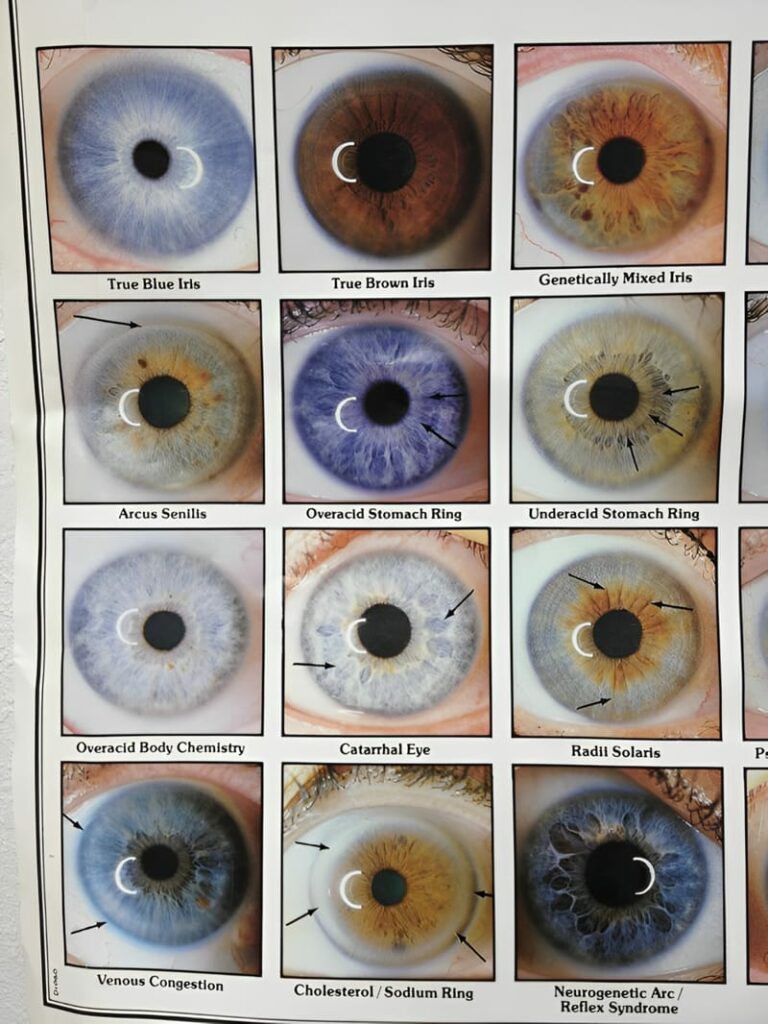
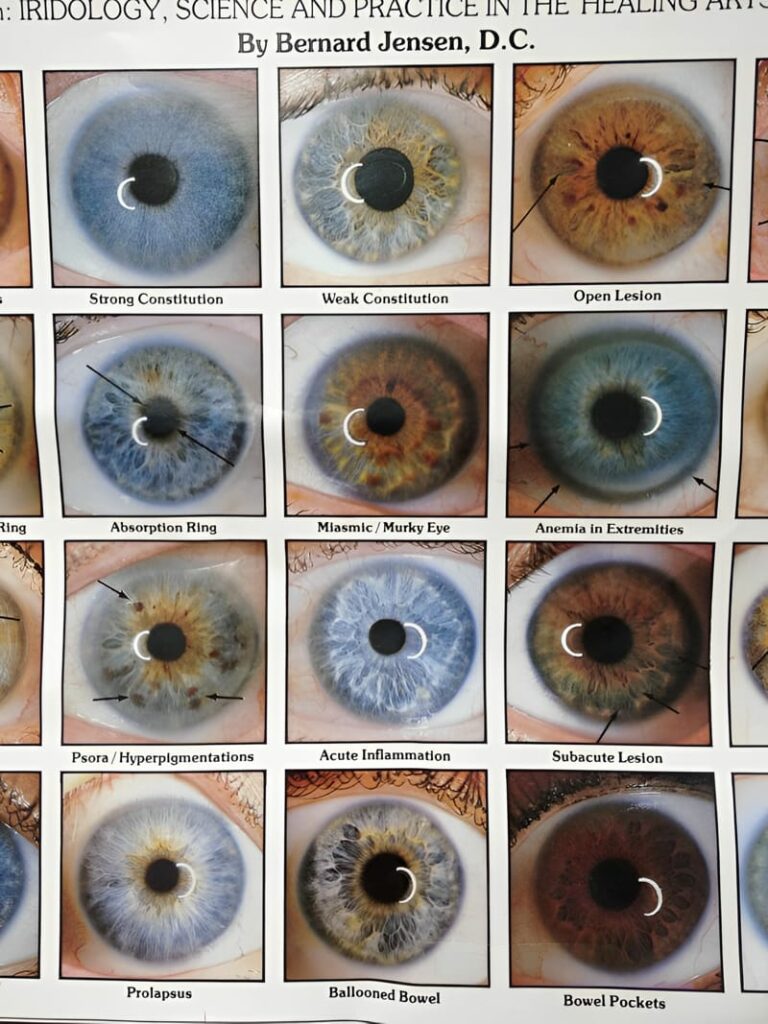
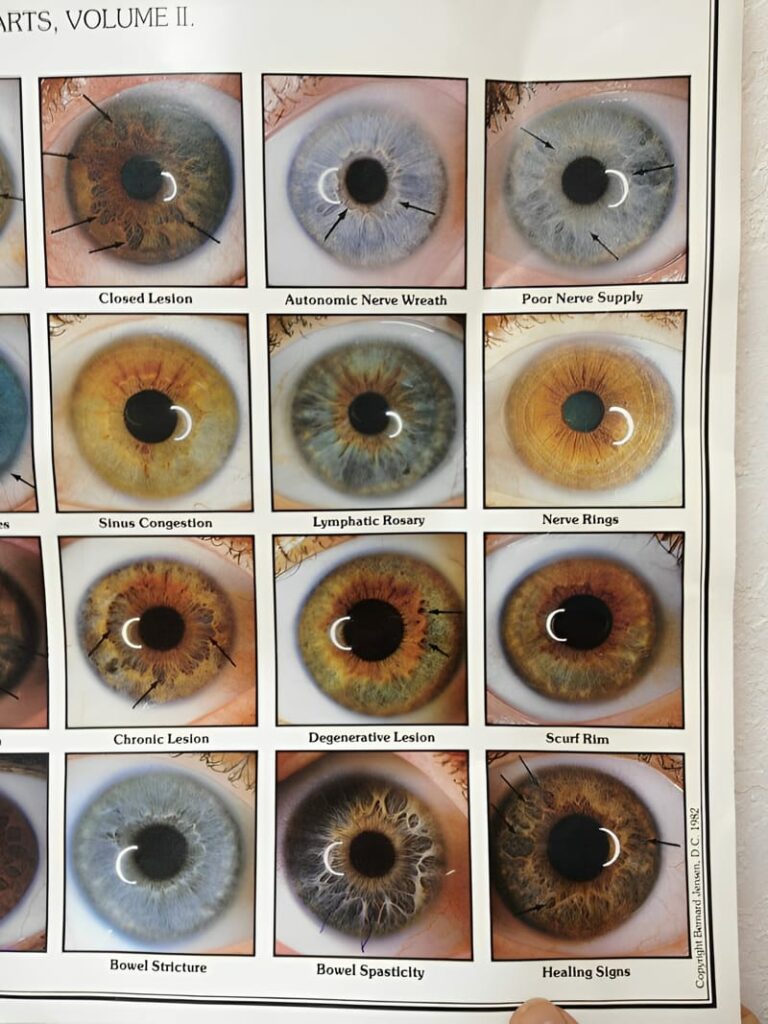
Important Things to Know about Iris Signs
In Dr. Morse’s clinical work, given his knowledge and experience in regards to the lymphatic system, he has come to realize that there are a few instances in which the way he sees the iris signs differs from how Dr. Jensen saw them.
Autonomic Nerve Wreath
Check 3rd picture of the ‘Iris Signs’ chart above; 1st row, 2nd column.
In Dr. Morse’s experience, the autonomic nerve wreath doesn't exist. The wreath isn't a representation of nerve integrity, nor is it a reflection of the autonomic nervous system.
In Dr. Morse’s view, this wreath reflects the intestines, and to be more specific, it represents the degree of malabsorption the individual is experiencing.
Poor Nerve Supply
Check 3rd picture of ‘Iris Signs’ chart above; 1st row, 3rd column.
Same as above about autonomic nerve wreath.
Acute Inflammation
Check 2nd picture of the ‘Iris Signs’ chart above; 3rd row, 2nd column.
What is referred to as acute inflammation in the picture, Dr. Morse describes as lymphatic congestion/stagnation.
Are Blood Tests Not Enough?
Traditional medical practices often place weight on blood analysis to assess a person's health condition. Things like mineral content deficiencies, disease presence, the effects of medications, as well as organ and gland efficiency are commonly measured through blood tests.
However, bear this in mind: blood tests can only offer a snapshot of your health confined to what blood can reveal, which might not accurately depict the actual situation.
This is because a significant part of a person's tissue health is related to the lymphatic system. As part of Dr. Morse's detox protocols, ensuring the smooth functioning of the lymphatic system is a key focus.
By utilizing the science of iridology, we have the ability to gauge the level of lymphatic congestion and pinpoint where this congestion is most prevalent – and understand why these wastes aren't being efficiently expelled from the body.
This knowledge gives us a more comprehensive view of why a particular organ or gland might be underperforming.
While blood tests can yield important insights and serve as an additional tool, they may not be as determinative as widely perceived.
Recommended Iridology Learning Material