

There are foods that:
- are aggressive and deeply detoxifying
- are mild, lesser detoxifying, and more conducive to building strength and gaining size
- either possess no inherent cleansing properties or cause further obstruction in the body
All three groups have their place in the detoxification process. Thus, the “best” food at the present time of your detoxification journey, is the food that'll help you break through plateaus (i.e. those times where it seems like you're not making progress or getting better) and speed up or slow down the cleansing process according to your needs.
The more toxic (physically and emotionally) and obstructed the body is, the easier and quicker it is to trigger cleansing effects, and the gentler the process and diet transition phase should be. This is in opposition to an aggressive all-or-nothing approach.
As far back as the late 1800s, Prof. Arnold Ehret, was one of the first and strongest proponents of slow-and-steady, wisely undertaken transition phases.
“You learned that I use partly cooked food during the transition diet and in the beginning, the vegetables prevail. This has for its purpose the slowing down of the elimination, for it is well known that people can stand a stewed or baked fruit whereas they cannot stand the same kind when fresh. Vital food is not the entire object to be gained at first but rather their property to dissolve and to eliminate. This vital healing efficiency is most perfect in all kinds of fresh fruits and will be found to be too aggressive for the majority of patients. This is undoubtedly the cause of the wrong ideas and reason for the ‘fruit fast’ being in ill repute, and it is the same reason why I use stewed and baked fruits in the beginning to slow down the elimination.”~Prof. Arnold Ehret
Properly grown and ripened fruit is bar none the crown jewel or crème de la crème of tissue cleansers.
In terms of edible food's impact on the lymphatic system, good quality fruit is only rivaled by astringent herbs, some of which Dr. Morse uses in all of his Lymphatic System herbal formulas.
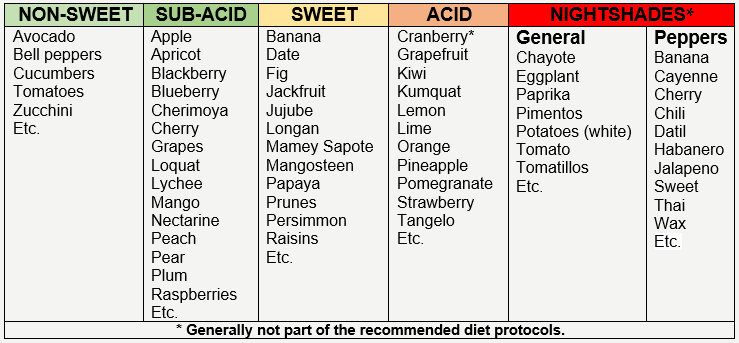
Citruses (notably lemons, lime, and grapefruit), grapes, and watermelons are the most favored detoxifying fruits on the aggressive side of the spectrum, grapes being – arguably – the most balanced cleanser of the lot, tending to be the fruit of choice in cancer detoxification protocols.
Grape and watermelon mono-diets (i.e. eating only the chosen fruit for an extended period of time) are a common practice.
But there are many other acid and sub-acid fruits to try and experiment with.
That said, consuming such powerful and astringent fruit when you’ve exceeded your physical, emotional or mental capacity to cope with the level of detoxification produced can prove very counterproductive.
The same applies to consuming lesser detoxifying foods when you’ve plateaued on them and require something stronger and more astringent.
A diet poor in astringents is why relying predominantly on vegetables (whether in the form of salads, green smoothies or juices) can prevent reaching a deep enough detoxification experience to overcome a plateau and finally heal properly.
To sum it up, there's no “best” food for the purpose of detoxifying the body. There are fewer and more appropriate/optimal foods which is determined by your needs and health condition.
It’s a matter of whether a person is ready for the powerful cleansing effects of acid and sub-acid fruits or is better suited for the lesser detoxifying properties of non-sweet and sweet fruits, vegetables, and tubers during transitioning, slowing down, or rebuilding.
In the case of an acute situation, the person may as an example need the obstructing and stimulating effects of, say, coffee, as a means of stopping an asthma attack in the absence of an herbal antispasmodic or inhaler, or alleviating severe shortness of breath, should the situation call for it.
General Diet Recommendations
The general initial dietary approach, for the average, non-terminally ill person, is a diet comprised of ~80% uncooked and 20% cooked food.
- Breakfast should be exclusively fruit in the form of a mono-meal, mixed fruit bowl (the fewer ingredients, the better), or a fruit smoothie.
- Lunch can be either a fruit meal as outlined previously or a large salad.
- Dinner may consist of a raw salad or steamed/cooked vegetables with a side of cooked root vegetables and/or grains.
Favorable root vegetables include:
- Carrot
- Celeriac (celery root)
- Parsnip
- Rutabaga (yellow turnip)
- Sweet potatoes
- Turnip
Favorable grains/so-called grains include:
- Amaranth
- Millet
- Quinoa (technically a fruit, but should not be treated as such)
- Wild rice (technically a seed)